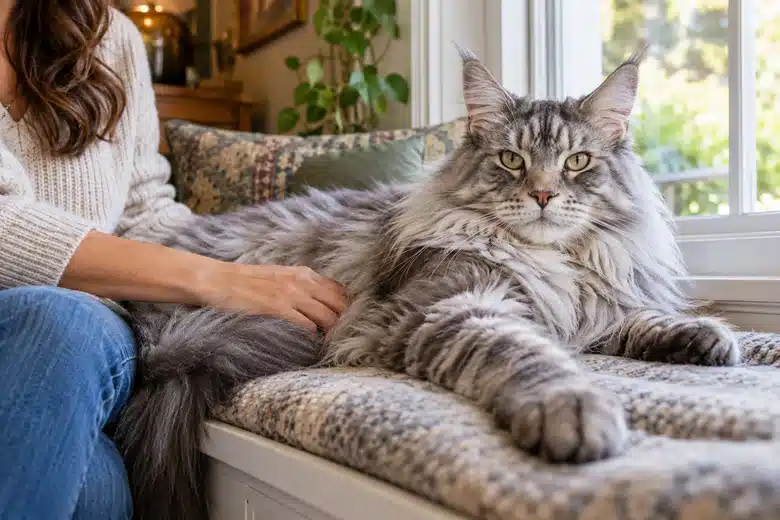
Large domestic cat, such as a Maine Coon
Evidence needed
Breed identity, age, health record and applicable cat policy
Safe boundary
Do not predict illness or price from body size alone

Separate a large domestic cat from a wild big cat, then examine species eligibility, hereditary-condition wording and the cat’s medical history.
Use these checkpoints to frame the literal question before reading the full guide.
Big cat insurance has two very different meanings. A large domestic cat belongs in a domestic-cat eligibility review; a lion, tiger or other wild felid must not be assumed eligible for an ordinary pet policy. Confirm the animal’s exact species or hybrid identity before interpreting a cat-insurance offer. The domestic-cat next step on this page does not establish wild-animal coverage.
The sections below show how to verify the answer and what can change it.
Pets Best has an official cat-insurance product page, providing a real domestic-cat product starting point. It does not establish that every large breed, hybrid or wild felid can enroll. Write the actual species and breed as documented by the veterinarian; do not select a convenient domestic-cat label for a different animal. A quote field that accepts text is not proof that the insurer accepts the risk.
| Animal meant | Evidence needed | Safe boundary |
|---|---|---|
| Large domestic cat, such as a Maine Coon | Breed identity, age, health record and applicable cat policy | Do not predict illness or price from body size alone |
| Domestic cat described as overweight | Veterinary assessment rather than a guessed breed | Weight is not a new species or proof of a covered condition |
| Wild felid or uncertain hybrid | Exact species, lawful status and specialist written eligibility | Do not use an ordinary dog/cat purchase route as proof of cover |
The US Fish and Wildlife Service explains that the Big Cat Public Safety Act restricts possession and other activities involving listed wild felids, with defined exceptions. Its list includes lions and tigers. An insurance discussion cannot establish lawful ownership or replace that legal review. No specialist wild-felid insurance offer has been verified here.
This quote path is only for eligible future veterinary coverage for domestic dogs and cats. It does not insure another product or animal, undo a waiting period, or guarantee benefits for the condition, location or service discussed here. Check current policy exclusions.
Cornell’s veterinary cardiology material discusses a genetic component of hypertrophic cardiomyopathy in affected Maine Coon and Ragdoll lines. This supports asking about hereditary-condition wording; it does not mean a particular large cat has heart disease, that every large cat has the same risk, or that a policy will pay for screening or treatment.
| Issue | Clinical evidence | Contract check | Price implication |
|---|---|---|---|
| Hereditary heart concern | Veterinarian’s assessment; Cornell’s breed context | Hereditary exclusion or grant, prior symptoms, waiting period | Keep the same declared breed across quotes |
| Previously recorded murmur | Actual record date and investigation history | Pre-existing-condition definition and related-condition wording | A lower premium cannot reverse an exclusion |
| Screening without symptoms | Reason for test in clinical notes | Preventive screening versus diagnostic illness expense | Compare add-on price only if that service is actually included |
| Specialist consultation | Referral records and proposed services | Exam-fee and specialist-care clauses | Separate excluded consultation charges from eligible testing |
A useful hypothetical file contains a first visit note, later specialist recommendation and itemized estimate. If a murmur was documented before enrollment but the diagnosis came afterward, do not erase the earlier note from the timeline. Ask which dates and definition control the proposed claim. Conversely, a breed predisposition alone is not the same document as an individual diagnosis. The insurer’s issued wording and medical assessment are needed to settle the case.
No current breed-specific claim grant, price comparison or wild-cat product was established. The domestic-cat material is useful for preparing a review, not a promise of eligibility or payment. Seek veterinary care when needed rather than delaying for an insurance date.
Body size alone does not answer that. Resolve domestic versus wild species and any hybrid classification first.
No. Clinical risk and policy eligibility are separate. The cat’s own history and issued contract control.
These links provide independent government, academic or reference background. Actual policy wording controls insurance eligibility, benefits and claims.
This separate button is only for domestic cats, not lions, tigers or other wild big cats. It does not establish eligibility for a hybrid animal. Availability and benefits depend on the cat, location and applicable policy.